By the Blue Daisy Lawn Care team · Central Florida
It's a compelling offer. A lawn crew shows up, cuts the grass, and disappears — all for a low monthly rate. For homeowners in Clermont, Haines City, Davenport, and the Four Corners area, the marketplace app and per-cut lawn services have made this kind of pricing widely available. And on the surface, grass cut is grass cut, right?
Not exactly. There are specific, documented risks to low-cost mow-and-go lawn services in Florida that most homeowners don't know about — and that most cheap lawn service operators will never volunteer to tell you. This article lays out the facts, sourced directly from the University of Florida's Institute of Food and Agricultural Sciences (UF/IFAS Extension), the authoritative source on Florida turf management.
The Equipment Contamination Problem
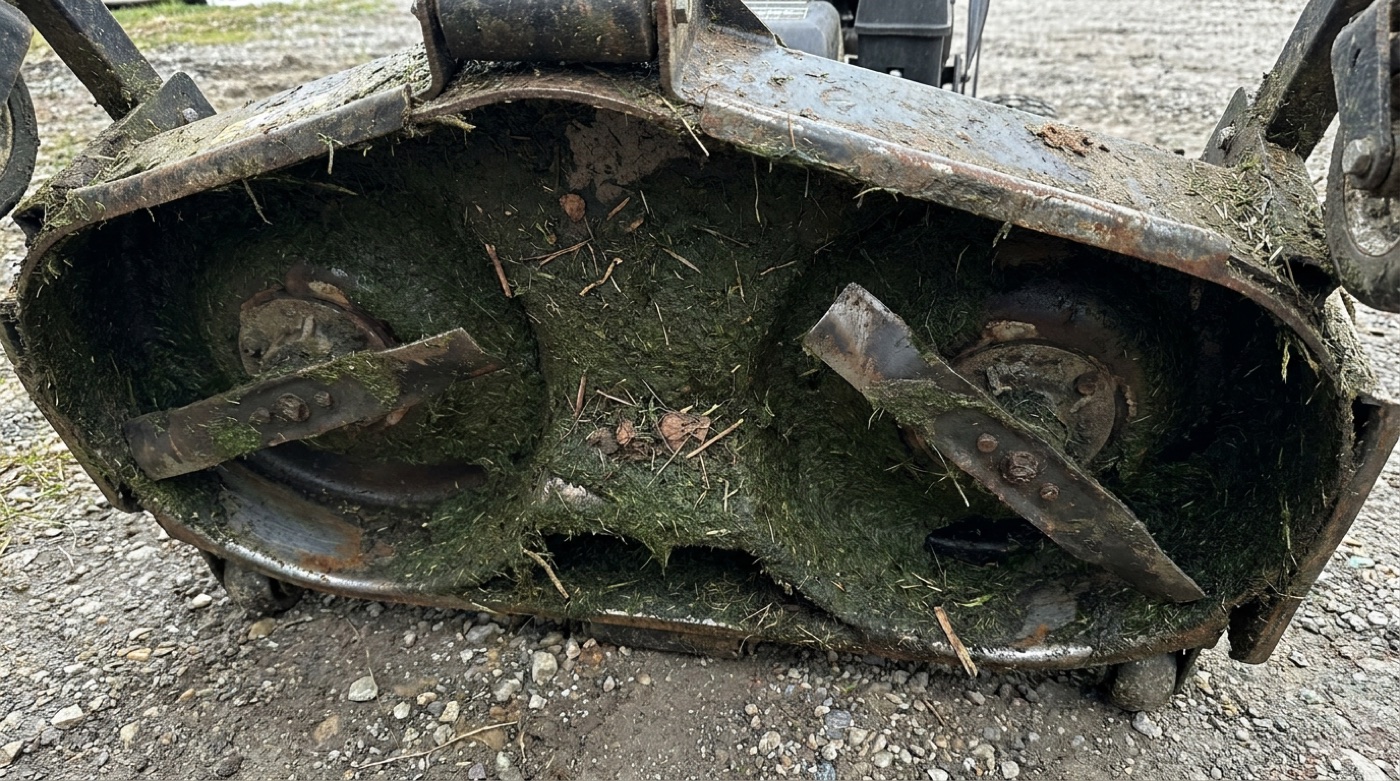
A crew running a route of 8–15 yards per day — the typical density for a budget lawn service — is pulling the same mower across every single property without cleaning the equipment between stops. This is not an edge case or a worst-case scenario. It is the standard operating model for mow-and-go services, where the economics require maximizing stops per day and minimizing time at each property.
The problem is what that mower carries from one yard to the next.
Large Patch (Rhizoctonia solani) — Documented by UF/IFAS
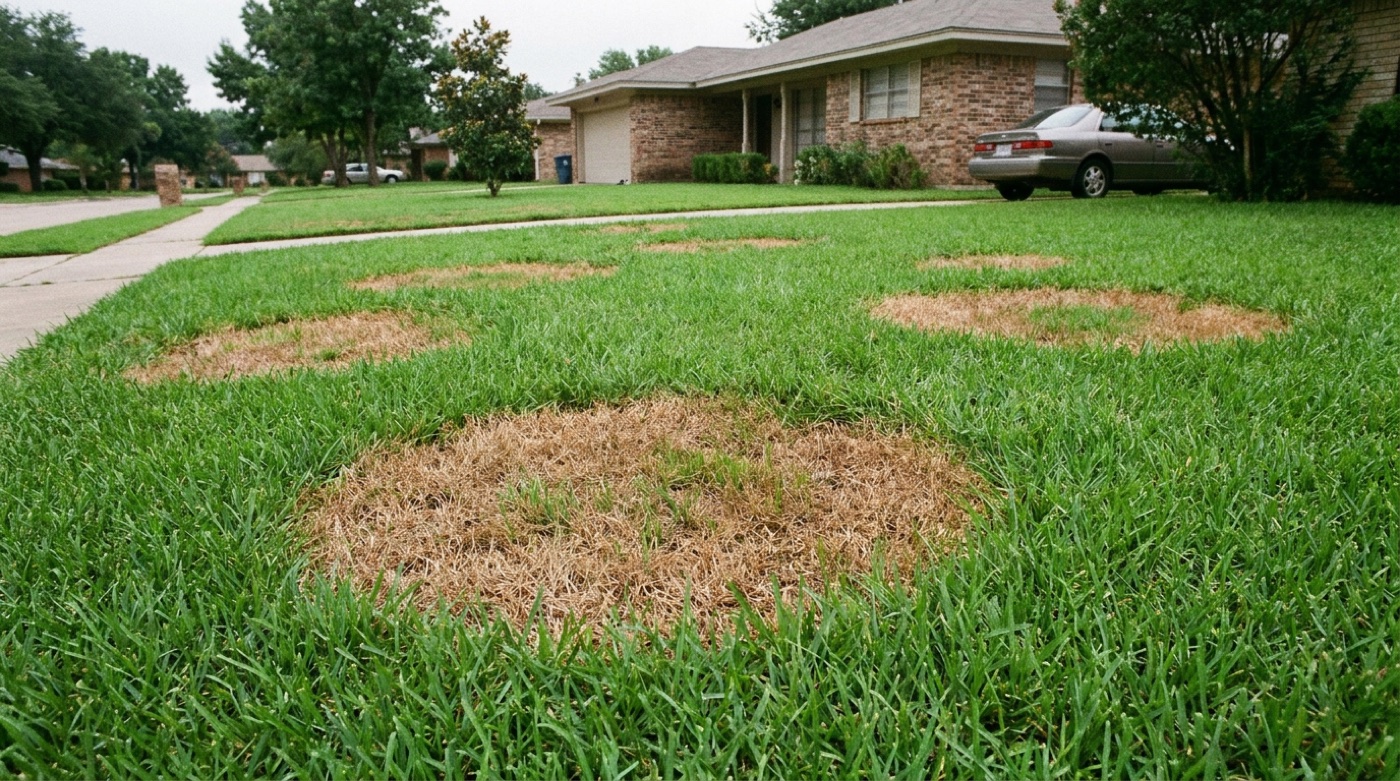
Large patch is one of the most common and destructive lawn diseases in Central Florida, primarily affecting St. Augustine and Zoysia grass. It produces circular brown patches that can reach several feet in diameter, typically appearing in fall through spring during cooler, wet conditions.
On this specific risk, UF/IFAS Extension's publication on Large Patch (EDIS LH044) states directly: "Diseased areas should be mowed last since mowers can spread this disease. The mower should be washed of all turf clippings before proceeding to the next site."
This is not a caution from a lawn care company trying to justify higher prices. This is the University of Florida telling professional lawn operators that mowing equipment is a documented vector for spreading this disease from lawn to lawn. A crew that doesn't clean their equipment before visiting your yard is potentially delivering fungal inoculum from every other lawn they serviced that day.
Gray Leaf Spot (Pyricularia grisea) — Spreads via Wheels and Blades
Gray leaf spot is a warm-season disease that primarily attacks St. Augustinegrass during Central Florida's hot, humid summer months — exactly when lawn services are at peak activity. It produces small gray lesions on grass blades that rapidly expand and kill affected tissue, giving the lawn a scorched, dying appearance.
Extension literature on gray leaf spot notes that "shoes and the lawn mower's wheels and blades are effective at spreading GLS spores." Mowing wet grass in the presence of gray leaf spot doesn't just cut the grass — it actively distributes spores across the entire lawn surface and deposits them on every subsequent lawn the mower visits.
Take-All Root Rot (Gaeumannomyces graminis)
Take-all root rot causes yellowing, wilting, and root decay in St. Augustine and Bermuda lawns. Unlike large patch, which tends to appear in clearly defined rings, take-all root rot causes more diffuse yellowing that can be mistaken for drought stress or nutritional deficiency — which is part of why it's often caught late. It spreads through infected plant material and contaminated soil, both of which transfer readily on mowing equipment.
Weed Seeds: Crabgrass and Dollarweed
UF/IFAS Extension's Weed Management Guide (EDIS EP141) states plainly: "Mowers and trimmers used in weed-infested areas should be washed off before mowing or trimming in weed-free areas."
Crabgrass (Digitaria spp.) produces thousands of seeds per plant, and those seeds are small, light, and adhere readily to metal mowing surfaces. Dollarweed (Hydrocotyle umbellata) reproduces via fragments — any piece of stem or node that lands on moist soil can root and establish a new plant. A mower that went through a crabgrass-infested yard two stops earlier carries seeds and fragments that it deposits into your lawn with every pass.
This is not hypothetical. If your lawn has developed crabgrass or dollarweed patches in the same locations your lawn service mows through regularly, equipment contamination is worth seriously considering as a contributing cause.
The Cost of Remediation Exceeds the Cost of Prevention
Treating an established large patch outbreak typically requires multiple fungicide applications over 4–8 weeks, costing $200–$600+ depending on lawn size. A large patch that goes undetected for a full season can kill significant areas of St. Augustine that then require re-sodding. The equipment sanitation step that prevents this costs approximately 10 minutes per stop — but budget operators skip it because it cuts into their per-stop economics.
Mow-and-Go Is Not Lawn Care
The second major issue with cheap lawn services is what they don't do — not just what they do wrong.
A mow-and-go service has one deliverable: shorter grass. It doesn't include:
- Mowing at the correct height for your grass type. Many budget crews use a single blade height setting across all properties. For Floratam St. Augustine — which should be maintained at 3.5–4.0 inches according to UF/IFAS Extension — mowing at 2.5 inches is scalping. Scalping creates open wounds, reduces root depth, and invites disease and weed establishment. (See our full article on correct mowing height for Florida lawns.)
- Fertilization. Without regular fertilization, Florida lawns thin progressively — particularly St. Augustine, which requires a seasonal nutrition program to maintain the density that naturally suppresses weeds. A thin lawn from skipped fertilization is an open invitation to weed colonization that no amount of mowing can reverse.
- Turf observation. A professional crew that knows your lawn recognizes early signs of chinch bug damage, fungal disease activity, or moisture stress. A rotating gig-economy crew that has never seen your lawn before has no baseline to compare against. Problems go unspotted until they're expensive to fix.
- Sharp blades. UF/IFAS Extension specifically notes that dull blades tear rather than cut grass blades, causing brown tips that homeowners mistake for drought or disease. Budget crews often run the same blade through an entire season without sharpening — the mowing schedule is too tight for the stop time that proper maintenance requires.
What Proper Equipment Sanitation Actually Looks Like
We want to be clear about what responsible equipment sanitation involves — not to position it as an exotic or expensive practice, but to illustrate that it is a straightforward professional standard that most budget operators simply choose not to follow.
Before each property visit, a properly maintained crew should:
- Remove accumulated clippings and soil from the mower deck, blade assembly, and wheels using compressed air or a brush-and-rinse
- Inspect blades for dullness and replace or sharpen as needed
- When disease is known or suspected on any route property, apply a disinfectant solution to cutting surfaces before proceeding to the next yard
- Clean string trimmers and edgers at the same standard
This process takes approximately 10 minutes per property transition. It is a fixed operating cost that professional services with proper pricing models can absorb. Services built around the absolute minimum per-stop time cannot.
Monthly Plan vs. Per-Cut: The Service Model Matters
The service model a lawn company uses directly determines what they're incentivized to care about.
A per-cut mow-and-go service is incentivized to complete as many cuts as possible per day at minimum time per stop. Their measure of success is cuts completed. Lawn health over time, disease prevention, fertilization timing, and equipment sanitation are all outside the scope of what they've sold and have no bearing on their income.
A monthly lawn maintenance plan, by contrast, bundles the full scope of lawn health into a single recurring relationship. The service provider's interest aligns with the lawn's long-term health because a healthy lawn means a retained client. Fertilization gets done because it's built in. Equipment gets cleaned because the technician is accountable for the same lawn month after month. Problems get spotted early because the same crew sees the same yard consistently.
Blue Daisy's monthly plan is built on this model — the same local crew, the same equipment standards, and fertilization included. If you're evaluating what your lawn actually needs versus what a cheap service delivers, the difference isn't just price — it's the scope of what "lawn care" actually means.
Frequently Asked Questions
Yes. UF/IFAS Extension's Weed Management Guide (EDIS EP141) explicitly states that mowers and trimmers used in weed-infested areas should be washed off before mowing or trimming in weed-free areas. Crabgrass seeds and dollarweed fragments adhere to mower blades and are deposited into every subsequent yard the equipment visits without cleaning.
Yes, and this is documented by UF/IFAS Extension. For large patch (Rhizoctonia solani), UF/IFAS EDIS LH044 states: "Diseased areas should be mowed last since mowers can spread this disease. The mower should be washed of all turf clippings before proceeding to the next site." For gray leaf spot, the literature notes that "shoes and the lawn mower's wheels and blades are effective at spreading GLS spores."
The primary diseases documented as spreading via mowing equipment in Florida are: large patch (Rhizoctonia solani), gray leaf spot (Pyricularia grisea), and take-all root rot (Gaeumannomyces graminis). All three primarily affect St. Augustine and Zoysia lawns, which are the most common grass types in Central Florida residential yards.
Several factors contribute: mowing at the wrong height (scalping), dull blades that tear rather than cut, no fertilization causing the turf to thin over time, and potential disease or weed introduction from uncleaned equipment. A cheap mow-and-go service addresses none of these factors — it only reduces visible blade length. The lawn may appear "mowed" but its underlying health declines without proper turf management.
Proper sanitation involves removing all clippings and organic debris from the mower deck, blade surfaces, and wheels before moving to the next property. When disease is present on any route property, a disinfectant solution should be applied to cutting surfaces. This process adds approximately 10 minutes per property transition and is a standard professional practice — though many budget operators skip it because their per-stop economics don't allow for it.
For Florida lawns, a monthly maintenance plan that includes mowing at the correct height, fertilization, and turf monitoring provides far better long-term outcomes than a per-cut mow-only service. Per-cut services have no incentive to manage turf health — their only deliverable is blade length reduction. A monthly plan treats the lawn as a living system requiring consistent nutrition, correct mowing, and ongoing observation by a crew accountable for the same property over time.
If you're evaluating lawn services in the Clermont, Haines City, Davenport, or Four Corners area and want to understand specifically what Blue Daisy's monthly plan includes, visit our lawn maintenance service page. And if you want to understand what grass type you have and whether its current condition is responding to what you're getting, our free estimate visit includes a basic turf assessment at no additional cost.
You may also want to read our article on the best grass types for Central Florida to understand whether your existing turf variety is matched to your yard's conditions — and whether what you're experiencing may be a grass-fit issue versus a maintenance issue.
Blue Daisy Sanitizes Equipment Before Every Job
This is a professional standard, not a selling point — but it's one that most budget operators skip. Clean equipment before every visit, every time. Request a free estimate or call us at (787) 671-2771.