By the Blue Daisy Lawn Care team · Central Florida
Walk down any street in Clermont or Haines City and you'll see at least three different grass types in the same block — some lush and dark green, some thin and pale, some downright struggling. The difference usually isn't how often the lawn was mowed. It's whether the right grass was planted in the right spot, and whether it was maintained correctly for that specific turf type.
Central Florida's climate — hot, humid summers, mild winters, and intense afternoon thunderstorms — narrows your practical grass choices significantly. According to UF/IFAS Extension, Florida's primary turfgrass options for residential lawns are St. Augustinegrass (including several cultivars), Zoysiagrass, Bermudagrass, and Bahiagrass, each with distinct requirements and trade-offs. Here's what you need to know about each one.
St. Augustinegrass: The Central Florida Default
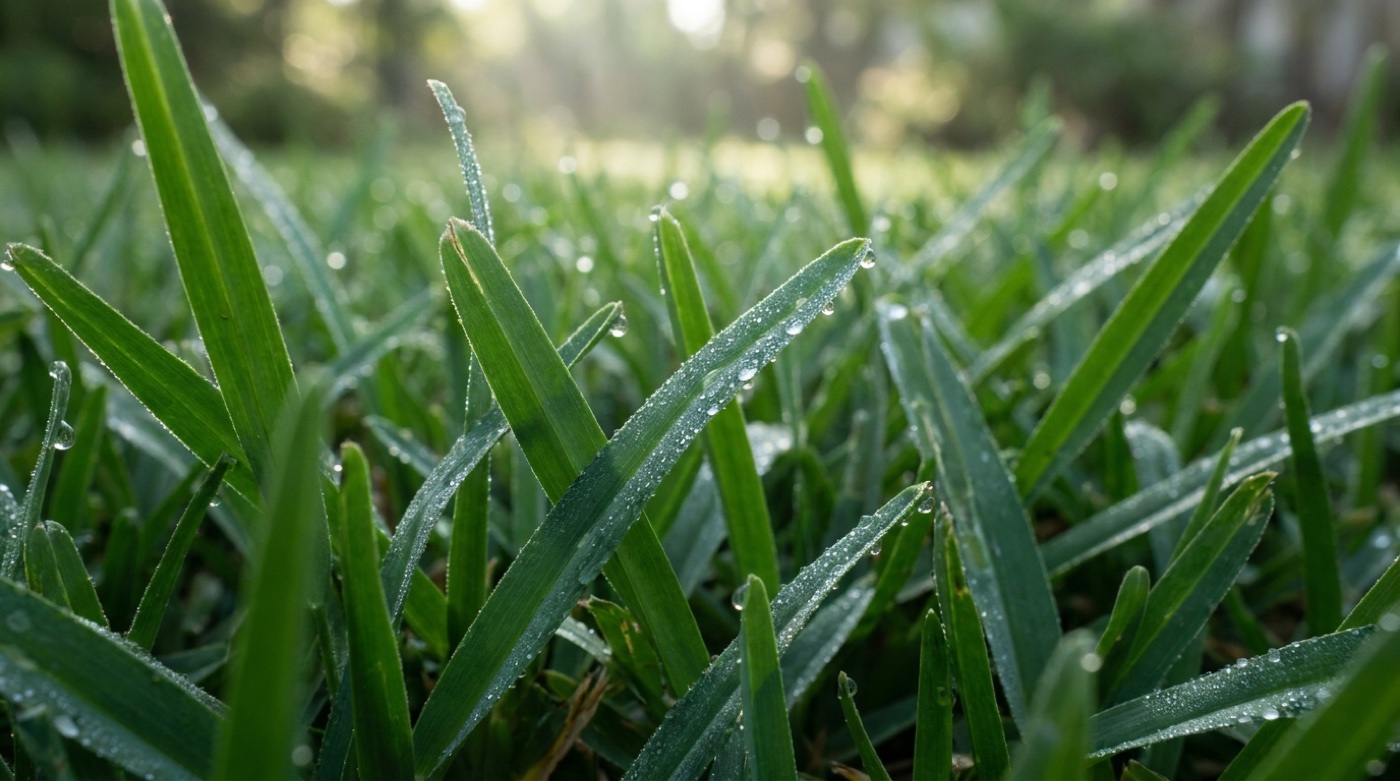
St. Augustine (Stenotaphrum secundatum) is the dominant turfgrass across Central Florida residential yards, and for good reason. It establishes quickly, handles the humidity well, and provides a thick, dense lawn that crowds out weeds when maintained correctly. It comes in several cultivars — each with different performance characteristics.
Floratam: The Most Common Cultivar
Floratam is what most Central Florida homeowners have installed by default. It's widely available, moderately priced, and produces a broad, medium-to-light-green blade. According to UF/IFAS Extension (EDIS LH010), Floratam should be maintained at 3.5–4.0 inches in height.
The critical thing to understand about Floratam is its shade intolerance. It requires at least 6 hours of direct sunlight per day. If you have oak trees, a privacy fence, or a home that shades a portion of your yard, you will see Floratam thin and eventually die in those areas. This is one of the most common problems we diagnose in Central Florida yards — and most homeowners assume the lawn is dying from disease or drought when the real issue is simply the wrong grass in a shaded location.
ProVista: The Upgrade Worth Knowing About
ProVista is a newer St. Augustine cultivar developed by Scotts, built on Floratam genetics but with meaningful performance improvements. It has become one of the most compelling sod upgrades available in Central Florida.
According to UF/IFAS Collier County Extension (blogs.ifas.ufl.edu/collierco), ProVista grows approximately 50% slower in vertical growth compared to Floratam, which directly translates to less mowing frequency required to keep it at the correct height. It also requires roughly 20% less fertilizer to maintain its signature deep blue-green color.
ProVista should be maintained at 3.0–4.0 inches, with 3.5 inches being the sweet spot for weed suppression and root health. Its dense horizontal growth habit naturally crowds out weed establishment. It performs better than Floratam in partial shade and recovers well from pet and child activity.
One additional advantage: ProVista is glyphosate-resistant, meaning professional crews can use selective herbicide treatments to control weeds without damaging the grass itself — a significant benefit in an integrated weed management program.
The ProVista Upgrade Story
A homeowner upgrading from Floratam to ProVista sod gets half the mowing frequency, lower fertilizer costs, better performance in partial shade, and a visually richer deep green lawn. For yards where maintenance costs and aesthetics both matter, ProVista is categorically the better choice for Central Florida conditions.
Zoysiagrass: Durable, Drought-Tolerant, Demanding
Zoysia grass is gaining popularity in Central Florida as homeowners look for a lower-maintenance, more drought-tolerant option. Common cultivars in the area include Empire, Zenith, and JaMur for medium-to-coarse texture, and Zeon or Emerald for fine texture.
According to UF/IFAS Extension (EDIS LH011), medium and coarse Zoysia varieties should be maintained at 1.75–2.5 inches, while fine varieties like Zeon and Emerald require a much lower cut of 0.5–1.5 inches — typically requiring a reel mower for a clean cut at that height.
The strengths of Zoysia are real: excellent drought tolerance (it enters dormancy and recovers when rain returns), good traffic tolerance, and a very dense growth pattern once established. The weaknesses are also real. Zoysia is a slow establisher. It develops significant thatch over time and typically needs vertical mowing (dethatching) every one to two years. Its high silica and lignin content means a dull mower blade will tear rather than cut the blades, causing visible yellowing that homeowners often misdiagnose as disease. Zoysia is also susceptible to large patch disease, and because it grows slowly, recovery from a large patch outbreak takes considerably longer than in St. Augustine.
Bahiagrass: The Low-Input Option
Bahiagrass (Paspalum notatum) is found frequently on larger lots, rural properties, and roadside areas across Central Florida. It is genuinely the lowest-input turfgrass available — drought-tolerant, pest-resistant, and requiring significantly less fertilizer than any other Florida grass.
According to UF/IFAS Extension (EDIS LH006), Bahiagrass should be maintained at 3.0–4.0 inches. Its stems are very tough, which means a dull mower blade will give it a ragged, brown-tipped appearance that looks like drought damage or disease. If you have Bahia, sharpen your mower blade regularly — this is non-negotiable.
The trade-off: Bahia's open growth habit invites weed invasion, particularly crabgrass, dollarweed, and chamberbitter. It also produces unattractive seed heads every 7–10 days during the growing season, which is a common HOA violation. For curb-appeal-focused homeowners or properties in active HOA communities, Bahia is typically not the right choice.
Side-by-Side Comparison
| Grass Type | Mow Height | Shade Tolerance | Drought Tolerance | Maintenance Level | Best For |
|---|---|---|---|---|---|
| Floratam St. Augustine | 3.5–4.0 in | Poor (6+ hrs sun required) | Moderate | Medium | Open, sunny yards; curb appeal |
| ProVista St. Augustine | 3.0–4.0 in (best at 3.5") | Moderate (partial shade OK) | Moderate | Low-Medium (50% less mowing) | Homeowners wanting best aesthetics + lower upkeep |
| Zoysia (Empire/Zenith) | 1.75–2.5 in | Moderate | Excellent | Medium (thatch management needed) | Drought-prone areas; high traffic yards |
| Zoysia (Zeon/Emerald) | 0.5–1.5 in | Moderate | Excellent | High (reel mower, precise cuts) | Premium golf-course aesthetic |
| Bahiagrass | 3.0–4.0 in | Poor (full sun required) | Excellent | Very Low | Large, rural lots; no HOA restrictions |
Which Grass Is Right for Your Yard?
The honest answer depends on three things: how much sun your yard receives, how much visual impact you want, and how much time and money you want to invest in maintenance.
- Full sun, curb appeal is important, want lower long-term maintenance: ProVista St. Augustine is the strongest choice. The upfront sod cost is higher, but the savings in mowing frequency and fertilizer inputs over time are real.
- Full sun, standard budget, no HOA concerns about occasional seed heads: Floratam St. Augustine is the reliable, widely available default.
- Drought-prone yard, high foot traffic, willing to manage thatch: Empire or Zenith Zoysia performs well in Central Florida's dry periods and handles active use better than St. Augustine.
- Large lot, rural property, want the absolute minimum input: Bahiagrass will survive where others struggle, but expect a less manicured appearance and persistent weed pressure.
- Partial shade under oak trees or along fence lines: ProVista outperforms Floratam. In heavily shaded areas, consider shade-tolerant dwarf St. Augustine varieties (Seville, Jade, Palmetto — maintained at 2.5–3.0 inches) or a shade-ground-cover bed rather than turf.
What Happens After the Sod Goes In
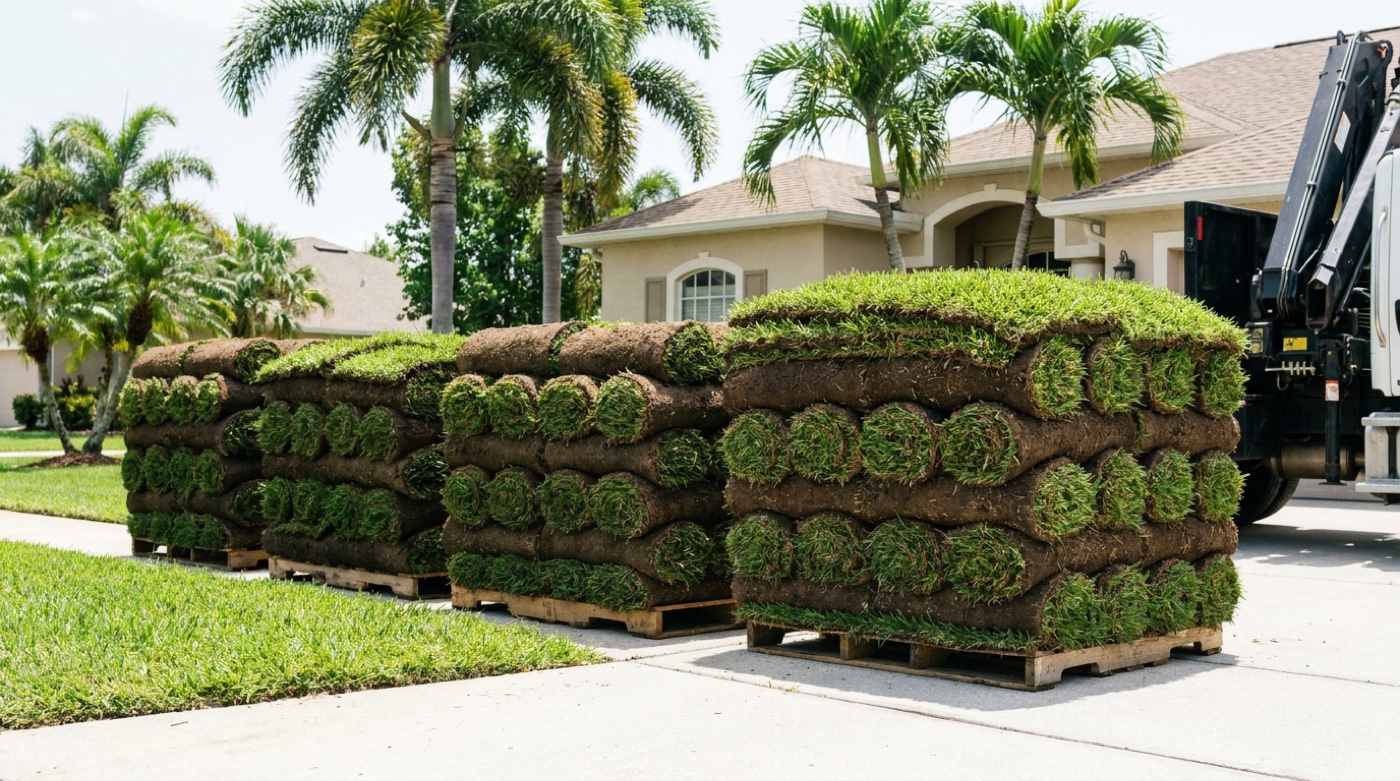
Even the best sod fails without a proper post-installation plan. New sod needs consistent moisture during the first 30 days to establish root contact with the soil beneath. Once rooted, it needs to be mowed at the correct height for its type — this is where many Florida lawns go wrong. Mowing too low (scalping) stresses the grass and opens the door to disease and weed invasion. Mowing too infrequently causes the same problem in reverse, forcing the crew to remove too much blade at once and violating the one-third rule.
Fertilization timing also matters immediately after installation. A starter fertilizer application within the first few weeks supports root establishment. Then a seasonal program kicks in to maintain color and density through Central Florida's distinct wet and dry seasons.
If you'd like help choosing the right grass for your specific yard conditions — or if your existing lawn has thinned to the point where replacement makes more sense than rehabilitation — our sod installation service page walks through what that process looks like. You can also read our article on the correct mowing height for each Florida grass type to understand what proper ongoing maintenance looks like after the sod is in.
Ready to Replace or Upgrade Your Lawn?
Blue Daisy Lawn Care installs sod across Haines City, Clermont, Davenport, and Four Corners. We'll assess your yard's sun exposure, soil, and drainage before recommending the right grass — not just what's cheapest to install. Request a free estimate or call us at (787) 671-2771.