By the Blue Daisy Lawn Care team · Central Florida
If your lawn in Clermont, Haines City, or Davenport looks thin in October — pale green, struggling against weeds, not bouncing back after dry spells — the most likely explanation is not what happened in October. It's what didn't happen in March and June. Fertilization is a seasonal program, and every missed application compounds into a progressively weaker lawn.
Florida lawns operate differently from the rest of the country because we have a year-round growing climate with distinct wet and dry seasons. That means fertilization timing and product selection need to match Florida's conditions, not the generic "once in spring, once in fall" advice printed on national fertilizer bags.
What Fertilizer Actually Does for Your Lawn
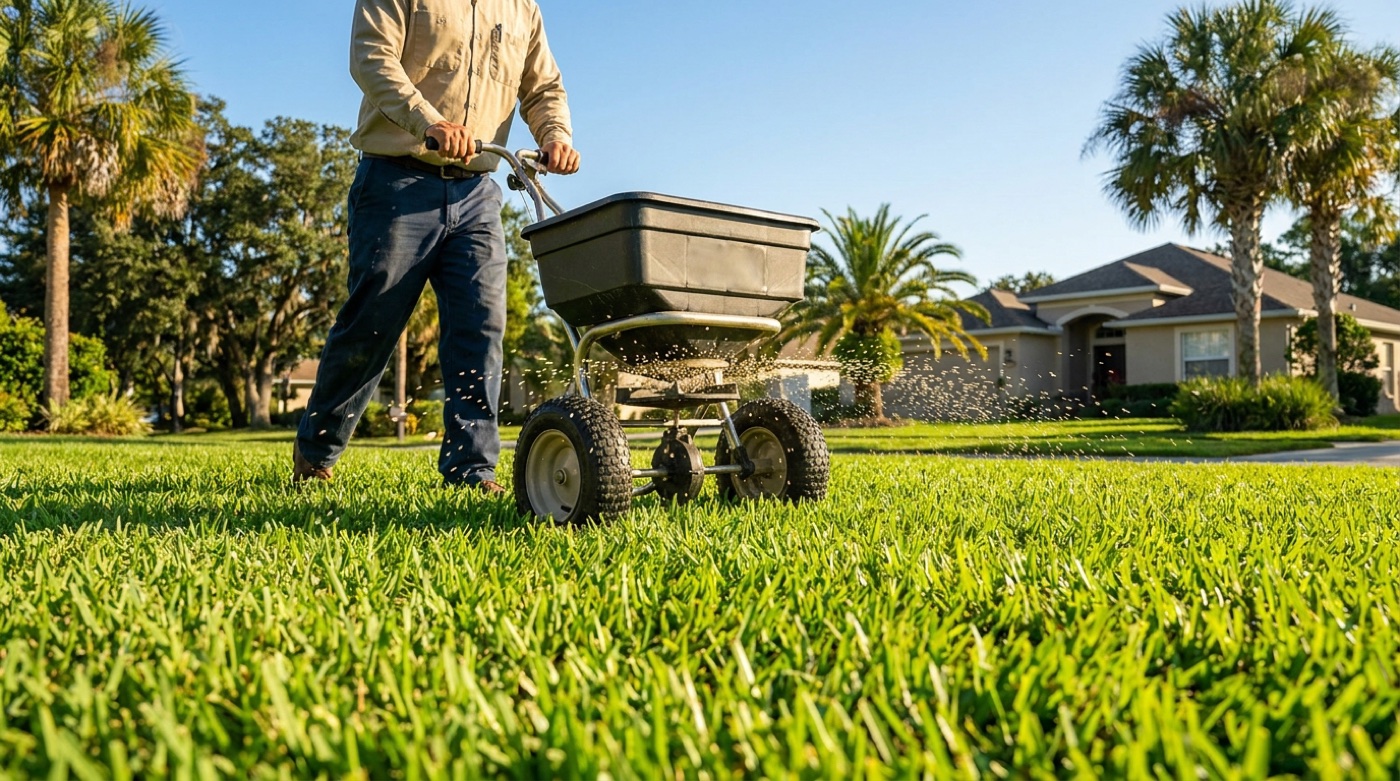
Fertilizer provides the three primary macronutrients turf requires to grow: nitrogen (N), phosphorus (P), and potassium (K) — the three numbers on every fertilizer bag. In the Florida lawn context, nitrogen is the nutrient that drives visible green growth and density. Potassium supports root strength, heat tolerance, and disease resistance. Phosphorus is generally less critical in Florida soils, which tend to be naturally phosphorus-rich, and many county-specific Florida ordinances restrict or prohibit phosphorus-containing fertilizers near water bodies to prevent algae bloom runoff.
Healthy turf needs adequate nitrogen to grow dense enough to shade out weed seeds at the soil surface. This is the fertilization-weed connection most homeowners don't fully understand: a thick, dense lawn is the most effective weed barrier available. When fertilization is skipped and the lawn thins, sunlight reaches the soil, and dormant weed seeds — crabgrass, dollarweed, chamberbitter — germinate and fill the gaps. You can spray herbicide all season, but if the underlying turf density is insufficient, the weeds will keep coming back.
Slow-Release vs. Fast-Release Nitrogen
The form of nitrogen in your fertilizer matters significantly in Florida. Fast-release (water-soluble) nitrogen products provide an immediate burst of green growth but are quickly leached through Florida's sandy soil, often within 2–4 weeks. They also carry a higher risk of burning turf in hot weather if applied at the wrong rate or without adequate irrigation afterward.
Slow-release (controlled-release) nitrogen products — including polymer-coated urea, sulfur-coated urea, and organic-based products — release nitrogen gradually over 8–16 weeks. This creates steadier, more even growth rather than a surge-and-crash cycle. It also significantly reduces the risk of nutrient leaching into groundwater, which matters both environmentally and legally in Florida.
For most Central Florida lawns, a fertilizer with at least 50% of its nitrogen in slow-release form is the appropriate choice. Professional programs that combine a slow-release base with targeted supplemental applications at key growth periods produce the most consistent results.
A Seasonal Fertilization Schedule for Central Florida
The following schedule applies broadly to St. Augustine, Zoysia, and Bahia lawns in the Clermont, Haines City, Davenport, and Lake/Polk County area. Specific products, rates, and timing should be calibrated to your soil test results and specific turf type — this is a framework, not a universal prescription.
Apply a balanced slow-release fertilizer as soil temperatures warm above 65°F and the lawn begins active growth. This application sets the foundation for density heading into summer. Do not apply too early — fertilizing dormant or slow-growing turf in cool temperatures simply wastes product and increases leaching risk.
This is the most critical window for weed prevention. A pre-emergent herbicide applied before summer weed seeds germinate — combined with a fertilizer application to drive turf density — is the most effective combination available. Crabgrass germinates when soil temperatures exceed 55°F consistently, which in Central Florida happens in March–April. A well-timed pre-emergent blocks germination before it starts.
Florida's wet season drives rapid growth in July and August. A supplemental fertilizer application during this period supports that growth without over-pushing nitrogen. Be cautious with nitrogen rates during peak summer heat — St. Augustine under high nitrogen stress in July is more susceptible to gray leaf spot disease, which thrives in warm, humid conditions.
A potassium-heavy application in early fall helps the turf build the root reserves it needs to survive the dry season and any cold snaps. In Central Florida, this application often includes iron to restore color as turf growth slows. Do not apply high nitrogen in late fall — it pushes tender growth that is more susceptible to cold injury.
Most Florida turfgrasses slow significantly during winter, particularly during cool dry spells. Fertilizing during this window can push growth that gets damaged by cool temperatures and doesn't produce the returns it does in warmer months. Focus on irrigation management and pre-emergent applications for cool-season weeds rather than fertilization.
What Happens When You Skip Fertilization Applications
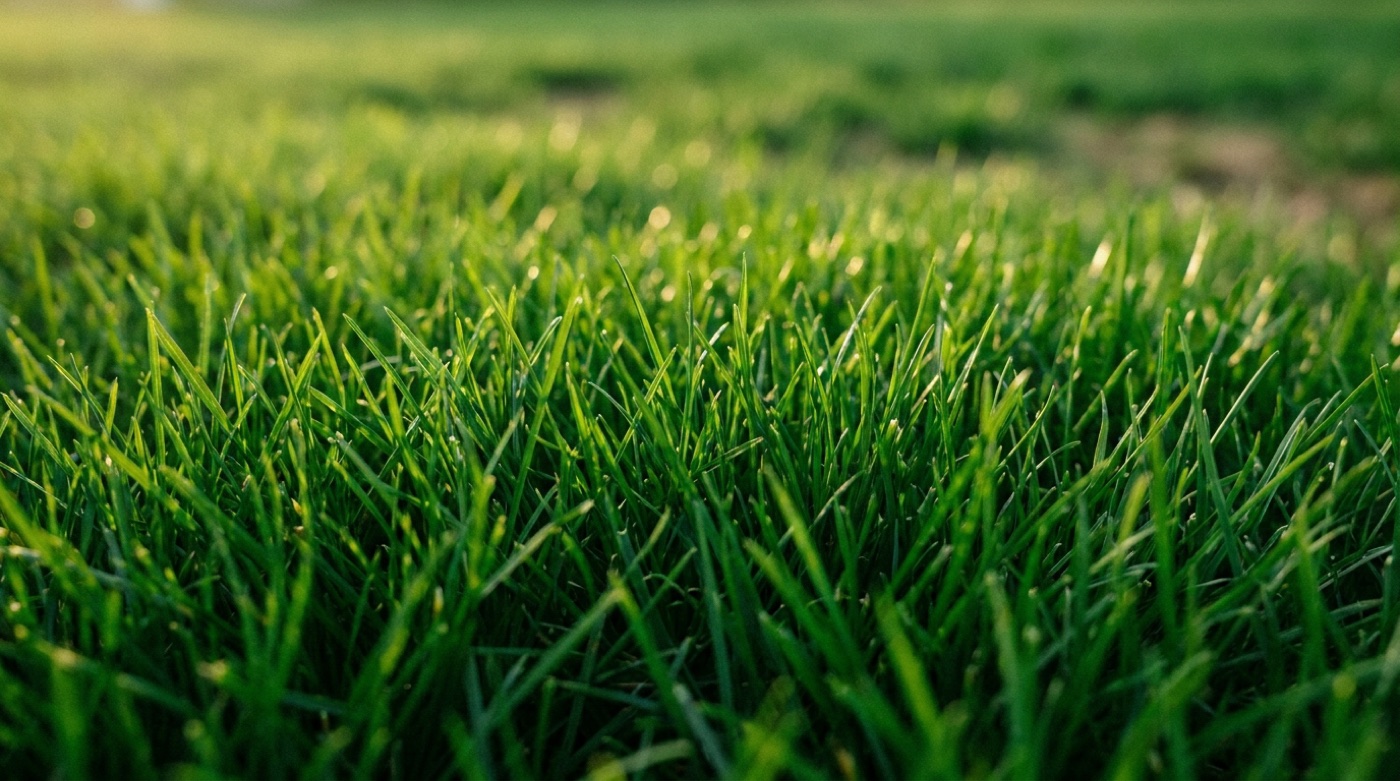
A lawn that misses two or three scheduled fertilization applications doesn't just look pale. It progressively loses the density that protects it. Thin turf in Florida's climate is an open invitation to weed colonization, fungal disease, and chinch bug damage in St. Augustine — all of which cost significantly more to remediate than a prevention program would have cost to maintain.
The most common scenario we encounter: a homeowner switches to a cheap mow-only service, fertilization stops, the lawn thins over 6–12 months, weeds fill in, and by the time they call us the yard needs a weed eradication program and potentially partial re-sodding rather than the simple fertilization program that would have prevented the decline.
Mowing Height and Fertilization Work Together
Fertilization without correct mowing height is a wasted investment. A lawn mowed too short loses the leaf surface area needed to photosynthesize and use the nutrients applied. Mowing at the correct height for your grass type maximizes the benefit of every fertilization application. See our guide on the correct mowing height for Florida grass types to understand how these two practices interact.
Fertilization and Florida's Water Bodies
Central Florida's proximity to lakes, wetlands, and drainage canals means fertilizer runoff is a genuine environmental concern. Many Lake County municipalities follow or align with Florida's Best Management Practices (BMPs) for urban turf fertilization, which include blackout periods on nitrogen fertilizer applications before heavy rainstorm events, restrictions on phosphorus-containing products within 10 feet of water bodies, and requirements on slow-release nitrogen percentages.
A professional fertilization program will apply products that meet these BMPs — protecting both your lawn and the waterways your neighborhood drains into.
To learn more about what a complete weed and fertilization program looks like, visit our weed and pest control service page. If you're not sure what grass type you have or whether your current lawn is healthy enough to respond well to a new fertilization program, our free estimate visit includes a basic turf assessment at no charge.
Start a Proper Fertilization Program
Blue Daisy Lawn Care includes fertilization in our monthly maintenance plans — applied on schedule, with the right product for your turf type and the current season. Get a free estimate or call us at (787) 671-2771.