
By the Blue Daisy Lawn Care team · Central Florida
Florida has one of the most abundant rain supplies of any state in the Southeast, yet water-stressed lawns are one of the most common problems we see across Haines City, Clermont, Davenport, and the Four Corners area. The reason is almost never a lack of rainfall during the wet season — it's an irrigation system that was set up incorrectly, never verified after installation, or silently malfunctioning for months while the timer kept running.
Understanding how your irrigation system works — and what it should actually be doing — is one of the highest-leverage things a Central Florida homeowner can do for their lawn's long-term health.
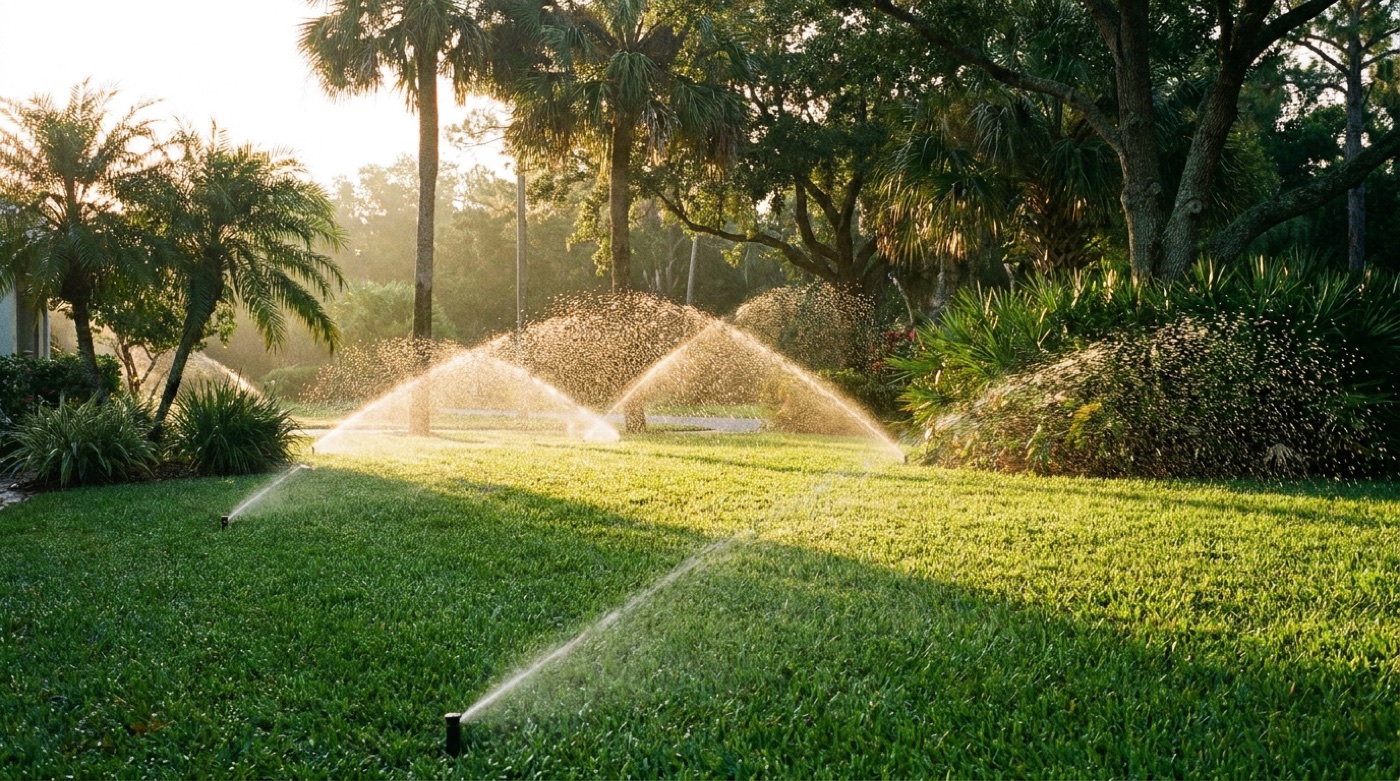
How a Residential Irrigation System Is Structured
A standard residential sprinkler system in Central Florida consists of a controller (the timer), a backflow preventer, a series of zones (each served by its own valve), and the heads — rotary rotors or fixed spray heads — that deliver water to specific areas of your yard.
Each zone is designed to cover a specific area: front yard turf, back yard turf, landscape beds, and sometimes a drip line for foundation plantings. Zones are separated because turf and landscape beds have different water needs. A turf zone might run for 30–45 minutes to deliver 3/4 inch of water, while a drip zone for shrubs and flowers should run longer at lower pressure to allow slow penetration rather than runoff.
The most important principle in system design is that each zone should cover plants with similar water needs. When a single zone covers both sun-exposed turf and shaded landscape beds, one or the other will always be receiving too much or too little water.
How Often Should You Water a Florida Lawn?
This is the question most Central Florida homeowners get wrong — and it costs them in both water bills and lawn health. The answer is not "every day" and not "twice a week by default." The correct answer depends on soil type, grass type, season, and rainfall.
As a general framework for Central Florida lawns:
- During the dry season (October–May): Most established lawns in our area need about 1/2 to 3/4 inch of water per irrigation event, applied once or twice per week depending on temperatures and soil moisture. Sandy Central Florida soils drain quickly, so a single thorough watering is better than shallow daily applications that never penetrate deep enough to encourage deep root growth.
- During the wet season (June–September): Florida's afternoon thunderstorms typically provide enough rainfall that supplemental irrigation should be reduced significantly or suspended entirely during active rain periods. A rain sensor (required by Florida law on all new irrigation system installations) should shut down your system automatically when measurable rainfall occurs.
- New sod (first 30 days): Newly installed sod is the exception — it needs frequent, lighter watering during the establishment period to maintain moisture at the sod-soil interface. Your irrigation schedule should be adjusted specifically for this period and then dialed back once the sod has rooted.
The clearest indicator that your lawn is water-stressed is a blue-gray color in the turf and blades that don't spring back after you walk on them. When you see footprints remaining in your grass, the turf is telling you it needs water. Don't wait until you see browning — that's a later stage of stress.
Florida Water Restrictions: What You Need to Know
Central Florida falls under the jurisdiction of the Southwest Florida Water Management District (SWFWMD), which sets year-round irrigation restrictions that apply to residential properties in Lake and Polk Counties.
The restrictions typically designate which days of the week each property is allowed to irrigate, based on the property's address (odd vs. even house number) or other district-specific schedules. Watering outside permitted days or outside permitted hours (usually restricted from 10am–4pm to reduce evaporation) is a violation that can result in fines.
Critically: there is an exemption for newly planted lawns or sod that allows more frequent watering for 30–60 days after installation, and a general exception for hand-watering and drip irrigation. Make sure you know your property's specific watering days and keep your system programmed accordingly.
Rain Sensor Requirement
Florida law (Section 373.62, Florida Statutes) requires all automatic irrigation systems to be equipped with a functioning rain sensor or soil moisture sensor that suspends irrigation when adequate rainfall has occurred. If your system doesn't have one — or yours has failed — you may be running your sprinklers during and after rainstorms, wasting water and potentially harming your turf with overwatering.
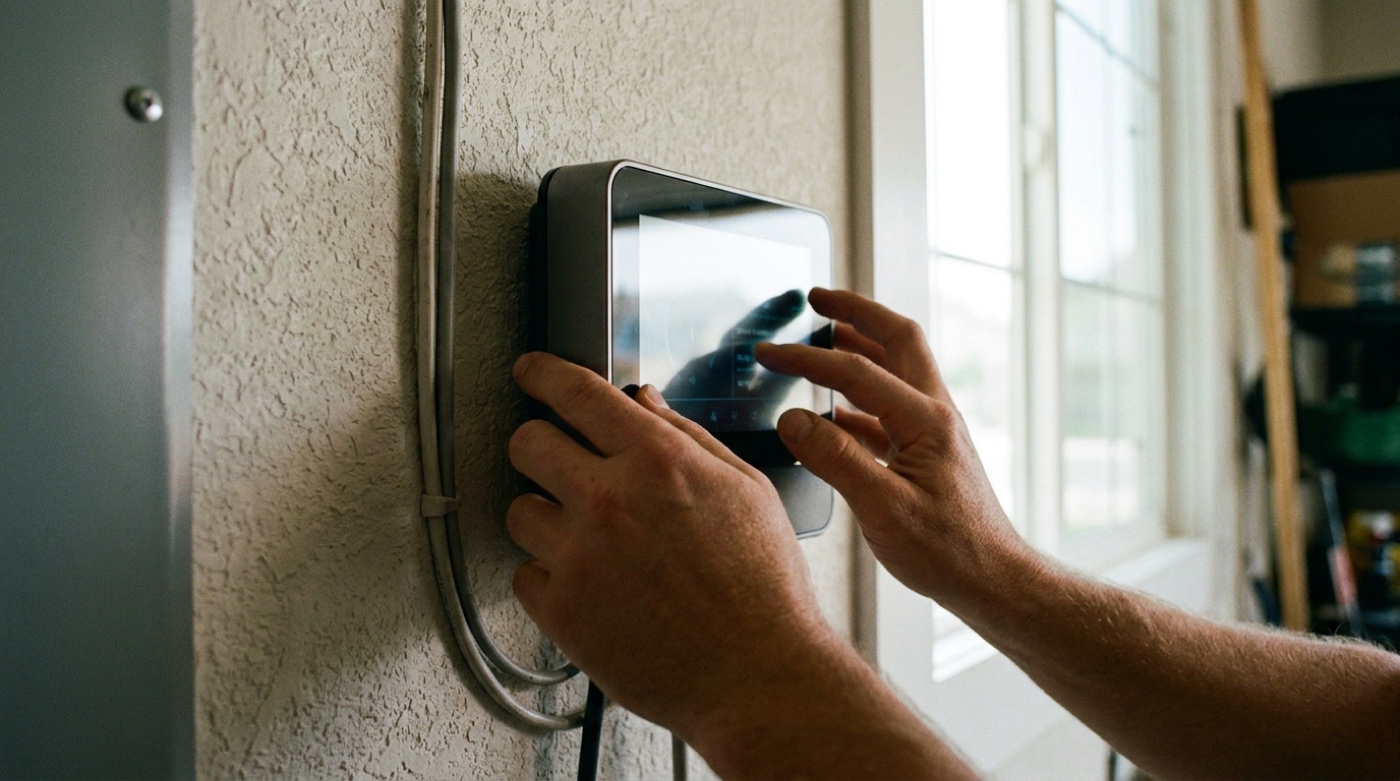
Common Irrigation System Problems in Central Florida Yards
Broken or Tilted Heads
Sprinkler heads get struck by mower wheels, vehicles, and foot traffic. A cracked head leaks water without distributing it correctly, creating soggy spots near the head and dry spots elsewhere in the zone. A head that has sunk below grade doesn't pop up fully, leaving a section of turf consistently under-watered. Walk your zones monthly with the system running to spot heads that aren't performing correctly.
Misaligned Coverage
Over time, rotary heads drift out of their intended arc. A head that was installed to cover a 180-degree arc of turf may drift to spray a fence, a wall, or the sidewalk. This is very common and very easy to miss until you notice a persistent dry strip in your lawn. Coverage verification — watching each zone run from start to finish — should be done at least twice a year.
Pressure Problems
Too much pressure causes heads to mist rather than rain, creating fine droplets that evaporate before reaching root depth. Too little pressure causes heads not to pop up fully or rotors to stop rotating. Either condition means your turf is not receiving the water you're paying for. A qualified irrigation technician can measure and adjust pressure at the zone level.
Controller and Valve Failures
Solenoid valves that control each zone fail over time, particularly in Florida's heat. A valve stuck open runs its zone continuously, potentially drowning turf and massively inflating your water bill. A valve stuck closed means an entire zone never runs. If one section of your lawn consistently looks better or worse than the rest, the zone valve for that area is worth inspecting.
Backflow Preventer Issues
The backflow preventer is the device that stops irrigation water from flowing back into your home's potable water supply. Florida requires backflow preventers to be tested annually in many municipalities. A failing backflow preventer is both a plumbing code issue and a health risk. If you've never had yours tested, add it to your property maintenance list.
Why Irrigation Verification Matters
Many homeowners assume their irrigation is working because the controller is programmed and the system turns on. But a system can run every scheduled day for years while delivering inadequate or incorrect coverage due to gradual head drift, partial blockages, or pressure changes in the water supply. The only way to confirm your system is doing what it should is to watch it run — zone by zone — and measure the output.
This is the core of what an irrigation verification visit includes: confirming head coverage, checking for leaks and breakage, testing the rain sensor, verifying the run-time schedule is appropriate for the season and grass type, and making sure each zone is watering the right area at the right rate.
If you suspect your irrigation is under-performing — or if you've never had it professionally checked — our irrigation setup and repair service covers system audits, head adjustments and replacement, valve repair, and new system installation across Central Florida. You can also read our article on lawn fertilization timing to understand how irrigation and fertilization work together for optimal turf health.
Schedule an Irrigation Inspection
Blue Daisy Lawn Care provides irrigation setup, repair, and verification across Haines City, Clermont, Davenport, and Four Corners. Request a free estimate or call (787) 671-2771.