By the Blue Daisy Lawn Care team · Central Florida
The biggest mistake homeowners in Central Florida make with their landscape beds is choosing plants at a garden center without knowing whether those plants are suited to the local climate. Central Florida sits in USDA Hardiness Zones 9a to 9b. That means hot, humid summers, occasional brief cold snaps in winter, and soils that range from sandy and fast-draining to heavier clay-mixed areas depending on your location in Lake or Polk County.
The good news is that Zone 9 supports an extraordinary range of low-maintenance plants — including some of Florida's best native species — that look great, survive without constant irrigation, and don't require professional-grade horticultural knowledge to keep alive. Here's a guide to the best options, organized by their most useful application in residential landscapes.
Color and Foliage: Statement Plants for Beds and Borders
Croton (Codiaeum variegatum)
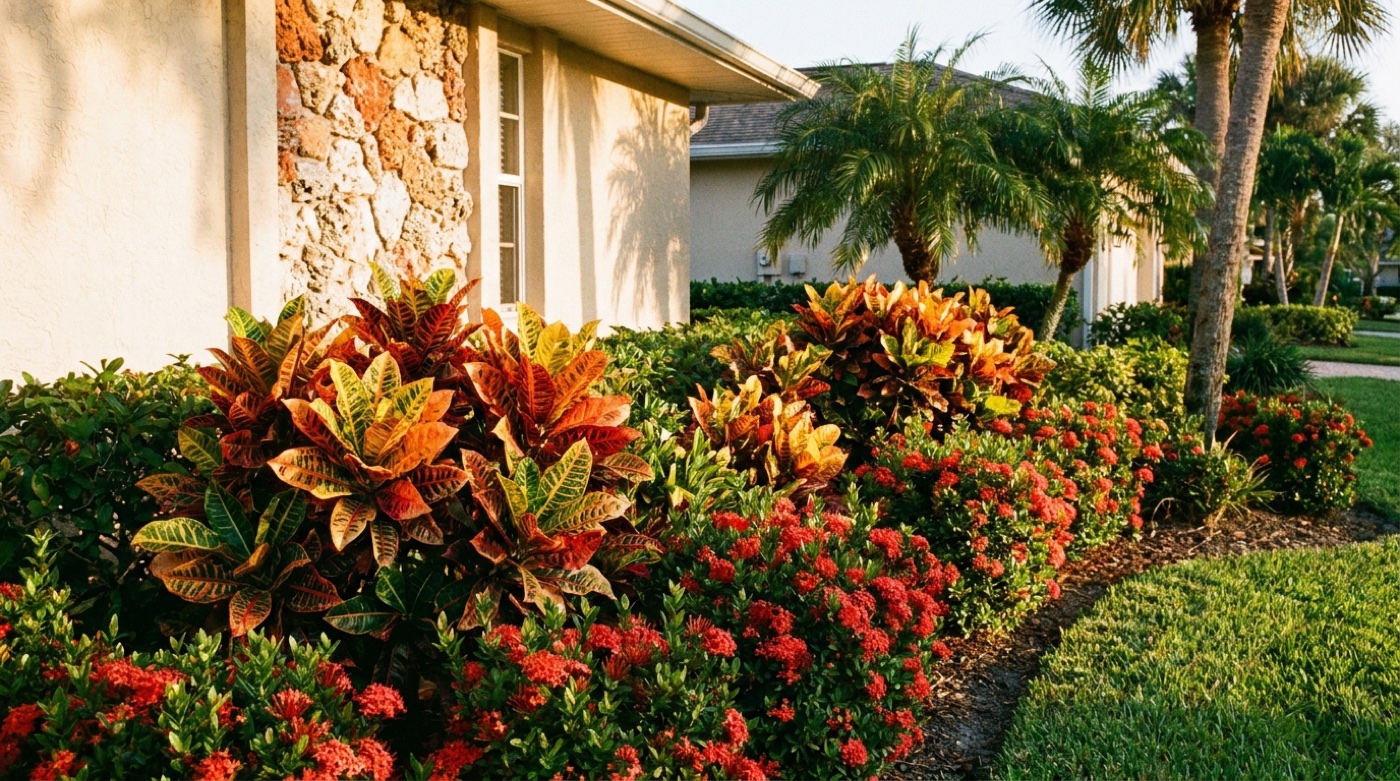
Croton is one of the most visually striking foliage plants available for Central Florida yards. Each leaf combines reds, oranges, yellows, and greens in patterns that look almost tropical — because they are. Croton thrives in full sun to partial shade, tolerates Central Florida's heat and humidity extremely well, and is drought-tolerant once established. It needs minimal pruning and develops into a full, bushy shrub over time.
Best use: foundation plantings, borders, and anywhere you want year-round color without flowers. Under full sun it develops the most saturated leaf colors. In deeper shade the foliage tends toward greener tones.
Ixora (Ixora coccinea)
Ixora produces dense clusters of small tubular flowers in red, orange, pink, and yellow, and in Central Florida's climate it blooms nearly year-round. It's a reliable butterfly and hummingbird attractor. Ixora prefers slightly acidic soil with a pH around 5.5–6.0. If planted in alkaline soil — common in some Central Florida development areas — the leaves will yellow, indicating an iron deficiency. The fix is an iron sulfate application and an acidifying fertilizer.
Best use: foundation plantings, borders, and low hedges. Full sun produces maximum flowering. Does well in containers on patios and pool decks.
Bougainvillea
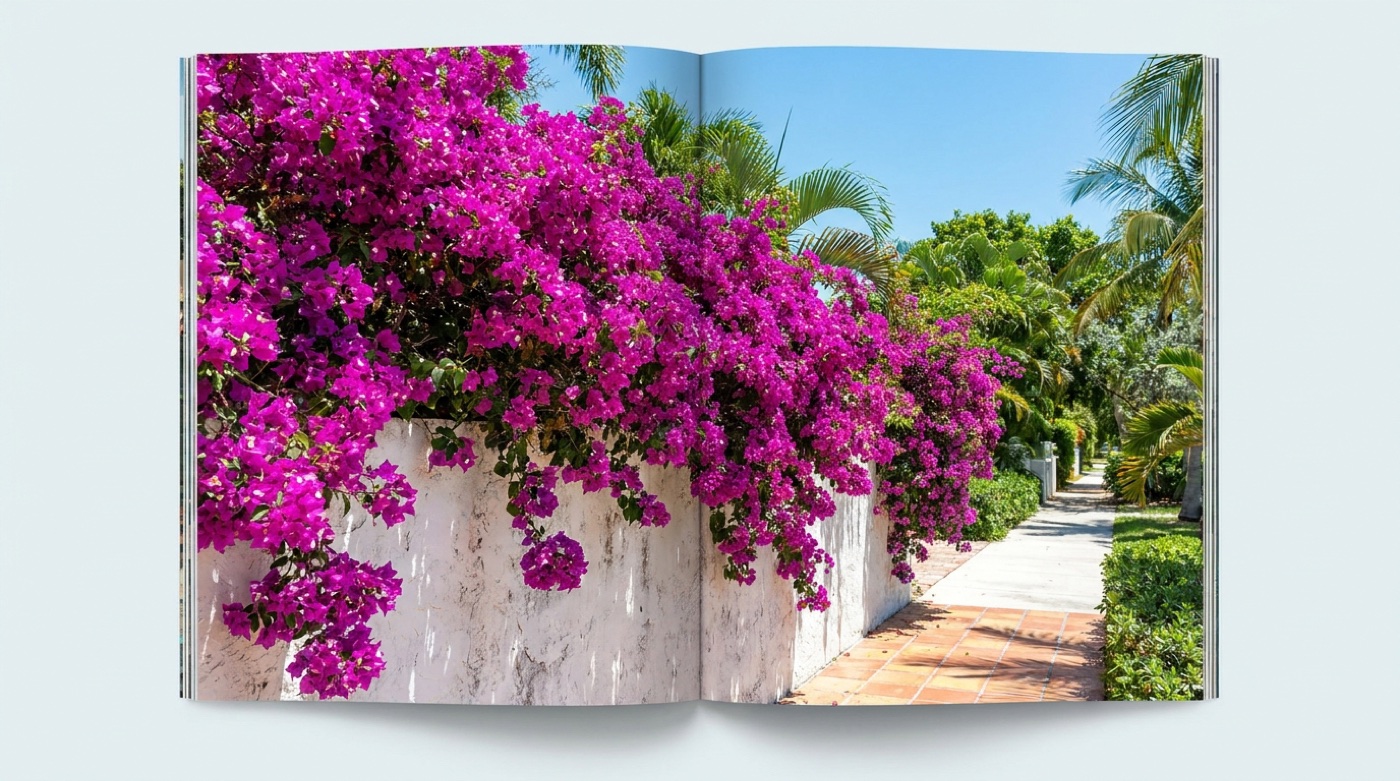
Few plants produce as much visual impact in Florida landscaping as bougainvillea. It produces intensely colored bracts — not true flowers, but the papery leaf-like structures surrounding the small white flowers — in vivid pinks, reds, oranges, and purples, and in Central Florida's climate it blooms nearly year-round with appropriate care.
Bougainvillea is drought-tolerant — in fact, reducing watering once established actually encourages more prolific blooming. It requires well-drained soil; overwatering causes fewer blooms and root rot. The thorns are significant, so plant it purposefully: on fences, trellises, and walls where people aren't walking close by. It makes an excellent security hedge.
Florida Native Plants: Low-Input, High-Value
Firebush (Hamelia patens)
Firebush is a Florida native that earns its place in any Central Florida landscape. It produces clusters of red-orange tubular flowers that attract hummingbirds and butterflies continuously from spring through fall. It is drought-tolerant once established, adapts to full sun and partial shade, and is essentially maintenance-free — a periodic hard trim if it gets too large is all it typically needs.
Best use: large borders, background plantings, rain garden edges. In protected locations it stays evergreen year-round. In colder winters it may die back to the ground, but it reliably regrows from the roots in spring.
Walter's Viburnum (Viburnum obovatum)
Walter's viburnum is a Florida native shrub that performs excellently as a hedge or specimen plant. It produces clusters of small white flowers in early spring that attract pollinators, followed by small berries that birds eat. Once established it is drought-tolerant and handles both full sun and partial shade. It can be maintained as a formal clipped hedge or allowed to grow naturally for a softer appearance.
Beautyberry (Callicarpa americana)
Beautyberry earns its place in the fall landscape when most other plants are quieting down — it produces vivid clusters of metallic purple berries that are genuinely stunning in the September–November window when little else in the landscape offers that kind of color. It tolerates shade and poor soil better than almost any other Florida landscape plant, making it an excellent choice for the areas under tree canopies where other plants fail. Birds eat the berries actively, adding wildlife value. It is very low maintenance: cut it hard once a year in late winter and it regrows vigorously.
Simpson's Stopper (Myrcianthes fragrans)
Simpson's stopper is a Florida native that functions as an excellent hedge plant or specimen shrub. It produces small, fragrant white flowers and decorative orange berries. It is drought-tolerant, salt-tolerant, and adapts to a range of soil conditions. It stays semi-evergreen year-round and requires very little input once established. As a hedge plant it takes shaping well without becoming leggy.
Specialty Plants: Shade, Structure, and Texture
Bromeliads
Bromeliads are the answer to a problem many Central Florida homeowners face: what do you plant in the heavily shaded areas under oak trees where almost nothing else survives? Bromeliads thrive in low light, are essentially self-watering (water collects in the central cup), need no soil fertilization, and come in dozens of varieties with striking foliage and flower spikes. They can be planted in the ground, attached to tree trunks, or displayed in containers.
They require well-drained soil or mounting — they will rot if standing water accumulates around the root zone. Under mature oak canopies in Clermont and Haines City yards, a mass planting of bromeliads creates a lush tropical floor that requires essentially zero maintenance once established.
Muhly Grass (Muhlenbergia capillaris)
Muhly grass is a Florida native ornamental grass that earns its keep almost entirely in one dramatic four-to-six-week window each fall, when it produces airy, billowing pink-to-purple plumes that catch the light and make a striking visual statement in borders and mass plantings. The rest of the year it is an attractive fine-textured grass clump that provides structure without demanding attention.
Muhly grass is drought-tolerant, deer-resistant, and requires full sun. It needs minimal maintenance — cut it hard to the ground once a year in late winter. It is an excellent plant for front-yard borders, where the fall color display creates a visual moment that differentiates a property from its neighbors.
Quick Reference: Light and Water Needs
| Plant | Light | Water (established) | Native? | Best Use |
|---|---|---|---|---|
| Croton | Full sun to partial shade | Low–moderate | No | Color beds, borders, foundation |
| Ixora | Full sun | Moderate | No | Hedges, borders, containers |
| Bougainvillea | Full sun | Low (less = more blooms) | No | Fences, trellises, security hedges |
| Firebush | Full sun to partial shade | Low | Yes | Large borders, wildlife gardens |
| Walter's Viburnum | Full sun to partial shade | Low | Yes | Formal or natural hedges |
| Beautyberry | Partial to full shade | Very low | Yes | Under trees, shaded beds |
| Simpson's Stopper | Full sun to partial shade | Low | Yes | Hedges, specimen shrubs |
| Bromeliads | Partial to full shade | Very low (self-cup) | No | Shaded beds under oaks, containers |
| Muhly Grass | Full sun | Low | Yes | Borders, mass planting, fall color |
Putting together a landscape that looks good across seasons — rather than just in the month it was installed — requires thinking about how plants layer, when they bloom or display color, and which ones thrive together in similar soil and light conditions. Our landscape design service is built around exactly this kind of long-term plant selection for Central Florida's specific conditions.
If you're planning a full landscape refresh or just want to update a few tired plant beds, read our companion article on the best trees and palms for Central Florida yards to round out the picture with the right canopy layer for your property.
Let Us Design Your Plant Beds
Blue Daisy Lawn Care handles landscape design and installation across Haines City, Clermont, Davenport, and Four Corners — plants selected for the specific conditions of your yard, not just what looked good at the nursery. Request a free estimate or call (787) 671-2771.